The game
Drone Front Skirmish
10–28 mm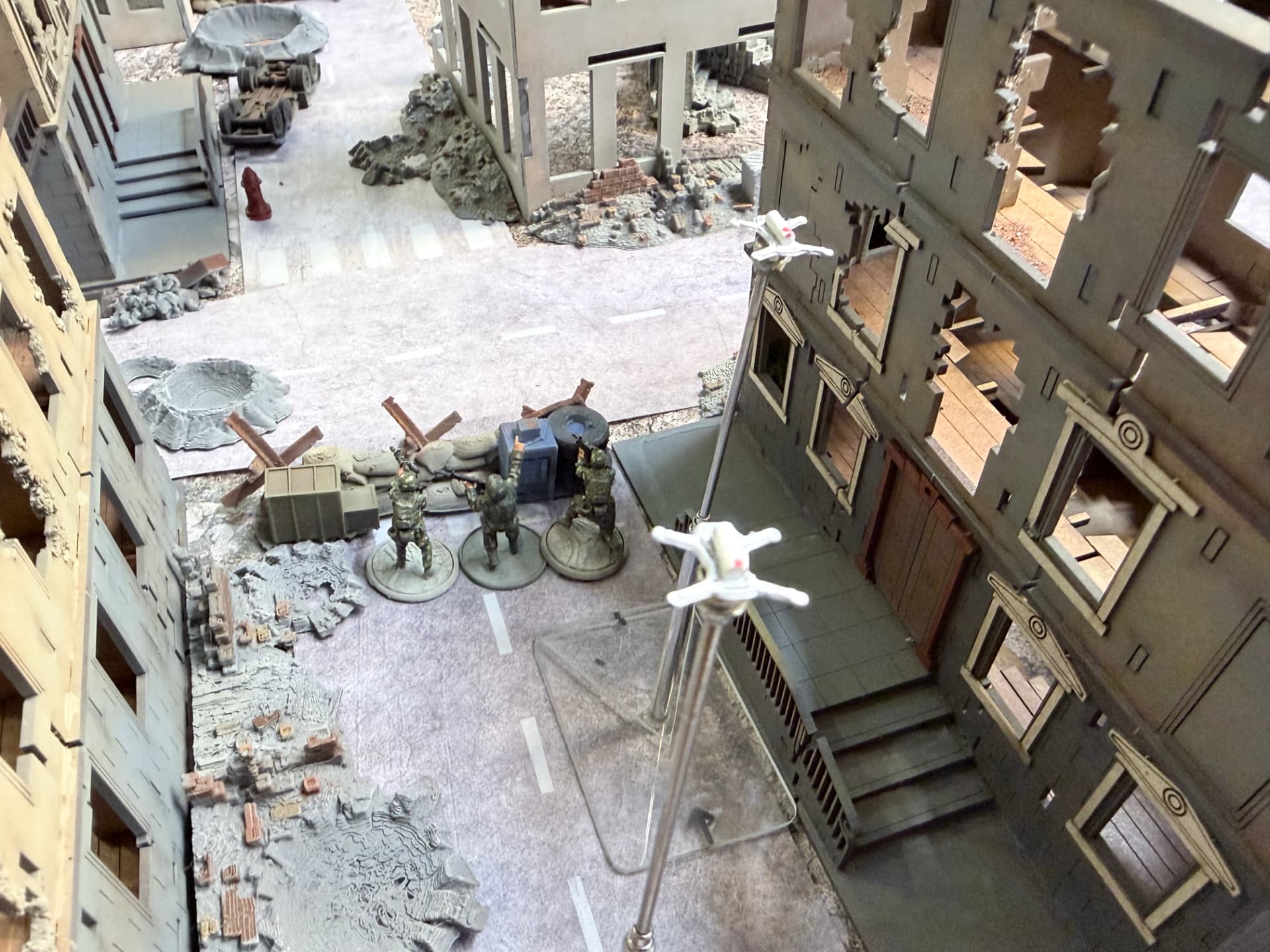
Gaming table
Compact: 120 × 120 cm or 120 × 180 cm.
Terrain coverage
At least 30% of the table, at various heights.
Character
Tactical by nature — a small fight, closely watched.
What you need to play
Two players, one compact battlefield.
10-28 MM MINIATURES
A force of infantry and vehicles, drones and missiles — plus your Commander, Mortar, EW and short-range AA. Maximum 18 units recommended per side, 3-4 hours playing time.
Dice
1d6 and 1d12. Optionally 2×d10 and 2×d20 for casualty tracking.
Game assets
An iPad or a printed copy of all game assets. Quick Reference Sheet 1,2 & 3 including Unit roster with CV values. Gaming Aid for weather forecast and casualty- or VP- tracking.
Table & terrain
A table with terrain — and lots of it. Skirmish scenarios assume at least 30% terrain coverage of various heights.
Measuring
A tape measure in centimetres. Key ranges are 10-60 cm.
Markers
Tokens for Fired and Suppressed printed from rulesbook.
Miniatures
The exact number of each type you need comes from the Force recommendation sheet.
Drones
Recon, FPV Attack, FPV Attack – Fibre Optical control, Bomber, Strike and Heavy Multicopter, all on flight stands.
Flight stands
Use two different heights so Attack assets are easy to tell from pure Recon ones — Recon assets on the higher stands.
UGV & USV
OptionalA couple of types in 10–28 mm, preferably with loose weapon stations and equipment so the advanced munition rules can be used. The Scenarios supplement relies heavily on the use of custom UGV & USVs.
Wrecks & effects
OptionalWrecked versions of the major ground units and/or artillery, plus smoke and fire markers. Not needed for play — they add visual drama.
Terrain
Dense, broken ground with a WWI feel — the more terrain, the better the game.
Terrain mat
Urban rubble or rural terrain — a WWI feeling works best.
Terrain pieces
Buildings, ruins, rivers, water, wrecked buildings, roads, trees, shrubbery, bunkers, trenches and minefields, in your chosen scale.
In the play examples
28 mm MDF terrain with 3D-printed craters, street signs, lamps and garbage containers, on a 120 × 180 cm (~4 × 6 ft) urban-rubble PVC mat from Deep-cut Studios.
Measurements
All measurements are centre-to-centre, so the rules work with or without bases on the miniatures.
All measurements are taken on the ground, so altitude change for drones does not matter for movement.
A laser pointer is a useful tool to prove you have real line-of-sight.
Basic terrain setup
- 1Pick a scenario. Place HQs and Deployment zone according to this and design your landscape: a dense urban ruined landscape, or dense rural terrain with hills, houses and trees.
- 2Lay out terrain of various heights until at least 30% of the table is covered.
All skirmish scenarios assume at least 30% terrain coverage of various heights. For the optimal Drone Front experience, go for the urban ruined landscape.
Turn Sequence
- 1Initiative
- 2Action
- 3Ground Combat
- 4End Turn
See it played
The rest of the turn — Initiative, Action, Ground Combat and End Turn — is walked through at the table in this gameplay video.
Gameplay video — How to Play a Modern Drone Warfare Wargame – Drone Front: Skirmish
Skirmish - Supplement 1: Scenarios
Out 14 October 2026Every Skirmish game starts by picking a scenario. This is where the twenty-one come from.
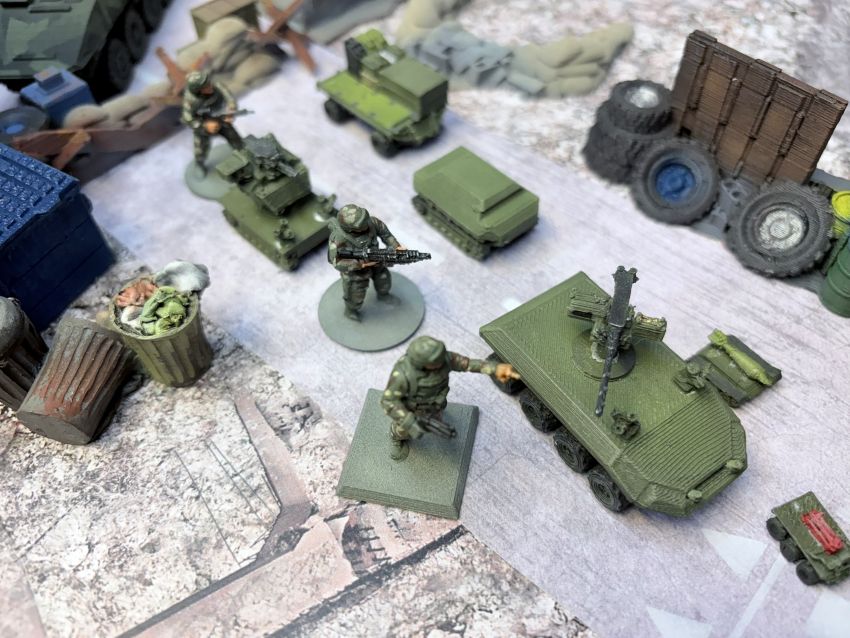
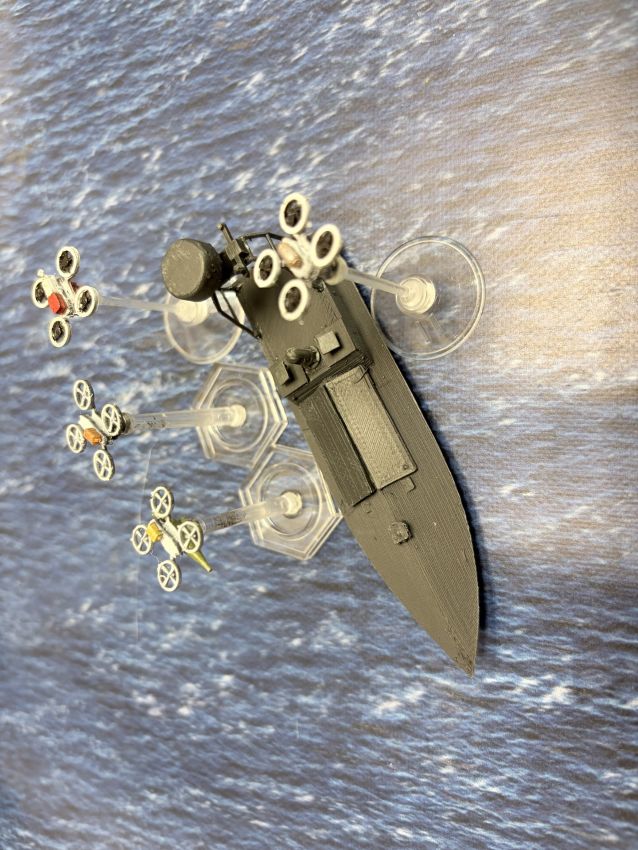
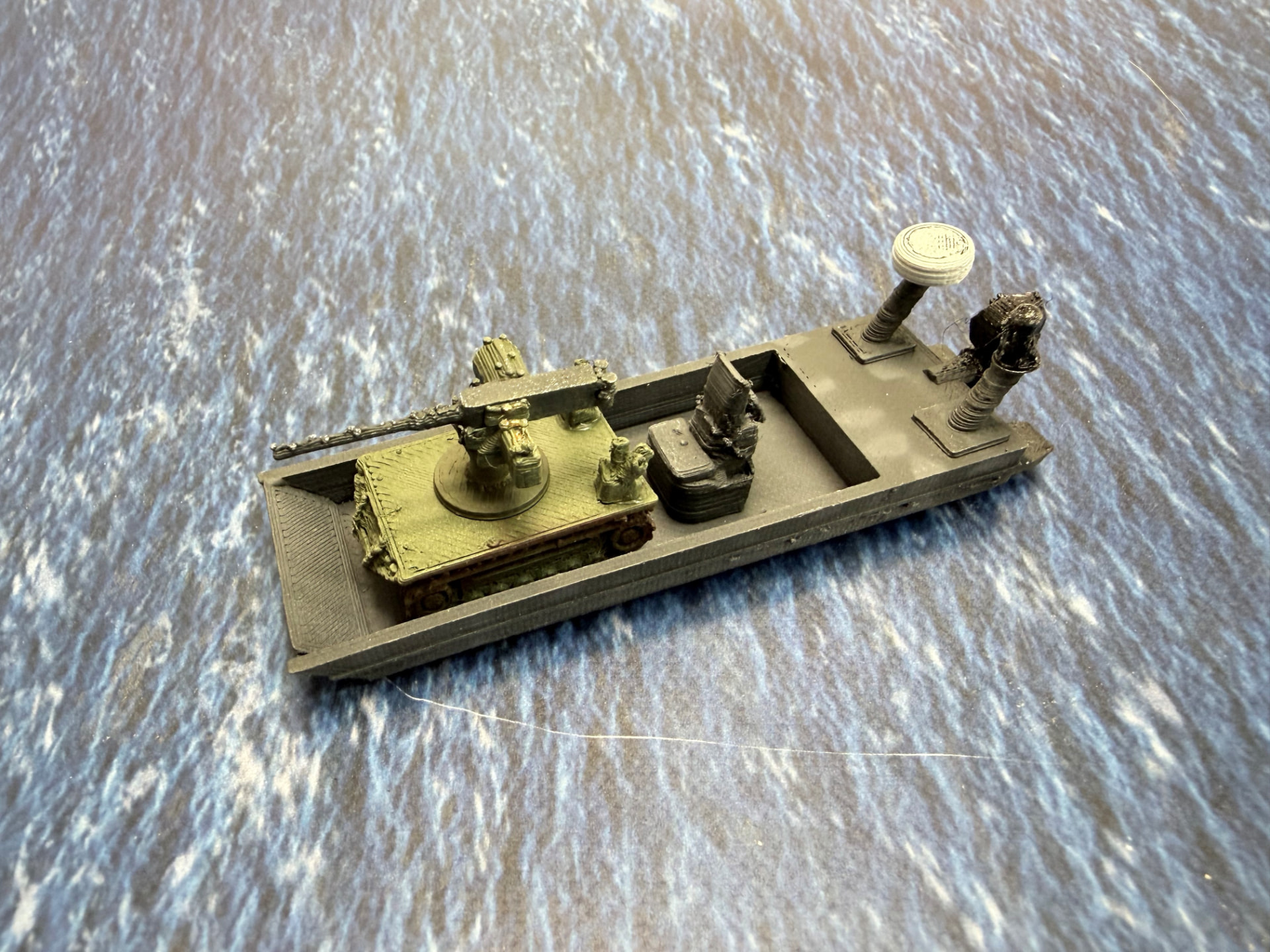
- 21 scenarios for the Skirmish core rules
- 16 trace drone warfare in Ukraine, 2022–2026
- 5 cover earlier, disputed and fictional conflicts
- PDF, downloaded from Wargame Vault
Twenty-one scenarios built on the Skirmish core rules. Sixteen follow the evolution of drone warfare in Ukraine from 2022 to 2026; five cover earlier, disputed and fictional conflicts beyond Ukraine.